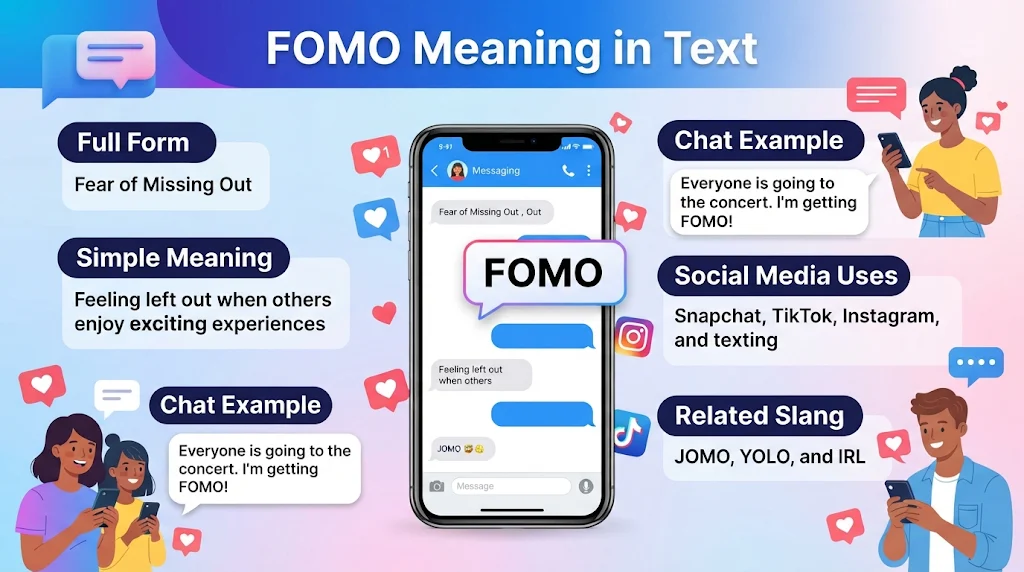
FOMO means Fear of Missing Out. In texting and social media, people use it when they worry about missing exciting events, conversations, experiences, or opportunities. It often describes curiosity, social pressure, or the feeling that everyone else is having fun without them.
If you have seen someone write FOMO in a text, comment, or social media caption, you might wonder what they actually mean. The fomo meaning in text is Fear of Missing Out, a popular internet abbreviation that describes the feeling of being left out of something exciting or important.
For example, your friends might post pictures from a party you missed. You may feel curious about what happened or wish you had joined them. That feeling is exactly what FOMO describes. Furthermore, people use this expression in everyday conversations, group chats, Instagram captions, and TikTok comments.
However, the abbreviation does not always express a serious emotion. Sometimes, people use it jokingly when discussing food, shopping, travel, entertainment, or weekend plans. Understanding the situation helps you interpret its intended meaning.
Whether you encountered it on Snapchat, Instagram, TikTok, or in a regular text message, this guide explains its definition, different uses, conversational examples, and natural responses.
Quick Answer: FOMO at a Glance
| Category | Explanation |
|---|---|
| Meaning | Fear of Missing Out |
| Context | Feeling left out or worrying about missing something enjoyable |
| Primary Platforms | Snapchat, TikTok, Instagram, WhatsApp, and text messages |
| Example | Everyone is going to the concert. I’m getting FOMO! |
| Tone | Casual, humorous, curious, or emotionally expressive |
| Similar Expressions | Feeling left out, missing out, wanting to join, social pressure |
What Does Fomo Meaning in Text Actually Mean?
The fomo meaning in text refers to Fear of Missing Out. It describes the feeling that other people are enjoying interesting experiences while you are not participating.
In simple words, FOMO happens when you think something exciting is happening somewhere else and wish you could experience it too.
For example:
Friend 1: Everyone is going to the beach tomorrow.
Friend 2: Now I’m getting FOMO!
The second person feels disappointed because they cannot join the group. They imagine everyone having fun without them.
However, the expression can describe more than social events. People also use it when discussing:
- Concerts and music festivals.
- Vacation trips and weekend adventures.
- New products and shopping trends.
- Popular movies and television shows.
- Online challenges and viral trends.
- Parties and celebrations.
- Group activities and social gatherings.
- Exclusive offers and limited opportunities.
What Does FOMO Stand For?
FOMO is an abbreviation of four English words:
| Letter | Word |
|---|---|
| F | Fear |
| O | Of |
| M | Missing |
| O | Out |
Together, these words describe the concern that you might miss something worthwhile.
For example, imagine your classmates are discussing a weekend trip. You cannot attend, but their exciting stories make you wish you could go.
That feeling is commonly called FOMO.
Where Did the Term Come From?
The expression has roots in discussions about social behavior and the desire to participate in rewarding experiences.
Marketing strategist Dr. Dan Herman helped popularize the concept in the early 2000s. Later, social media helped the abbreviation reach a much wider audience.
Patrick McGinnis also helped popularize the acronym through a 2004 article about social and business decision-making at Harvard Business School.
Eventually, FOMO became a familiar expression in online conversations.
Today, people use it to describe everything from missing a friend’s birthday party to feeling left out of a popular online trend.
Is FOMO a Slang Word or an Official Abbreviation?
FOMO is both an established abbreviation and a widely recognized internet expression.
People commonly use it in casual conversations. However, it also appears in discussions about psychology, marketing, consumer behavior, and social media.
Its meaning stays consistent across most situations: worrying about missing an experience or opportunity.
Contextual Dynamics and Nuances of FOMO
Although the definition remains the same, the emotional meaning can change depending on the conversation.
Sometimes, FOMO expresses genuine disappointment. In other situations, it adds humor or excitement to an ordinary message.
Understanding these differences helps you interpret messages more accurately.
1. Social FOMO
Social FOMO happens when someone feels left out of a gathering or activity.
For example:
Friend: We had such a great time at the birthday party!
You: Looks amazing. Major FOMO right now!
Here, the person wishes they had attended the celebration.
2. Travel FOMO
Travel FOMO describes the feeling of missing exciting destinations or adventures.
For example:
Friend: Just booked my vacation to Hawaii!
You: Wow, travel FOMO is real!
This message expresses excitement about the trip while wishing to experience something similar.
3. Shopping FOMO
People also use the abbreviation when discussing products, sales, and popular purchases.
For example:
Friend: That jacket is almost sold out.
You: You’re giving me serious shopping FOMO.
The person feels tempted to buy something because other people are purchasing it.
4. Trend FOMO
Trend FOMO happens when someone feels left behind because everyone seems to be discussing a new trend.
For example:
Friend: Have you watched the latest viral series?
You: Not yet. I’m getting FOMO because everyone keeps talking about it.
This usage is common in online communities.
5. Opportunity FOMO
Sometimes, the expression describes concern about missing an opportunity.
For example:
Friend: The registration closes tonight.
You: I don’t want to miss out. Total FOMO!
Here, the feeling comes from the possibility of losing an opportunity.
6. Playful FOMO
Not every use expresses genuine disappointment.
People frequently use the abbreviation as a joke.
For example:
Friend: We’re ordering pizza tonight.
You: Don’t post pictures. You’ll give me FOMO!
The message is lighthearted and friendly.
Real-Life Conversation Examples Using FOMO
The easiest way to understand an internet abbreviation is to see how people actually use it.
Here are five realistic chat conversations showing different situations.
Example 1: Missing a Birthday Party
SOCIAL CONVERSATION
Alex: How was Mia’s birthday party?
Jordan: It was amazing! Everyone had so much fun.
Alex: I wish I could’ve come.
Jordan: You definitely missed a great night.
Alex: I know! I’m getting serious FOMO now.
Meaning: Alex wishes they had attended the birthday celebration.
Example 2: Watching a Popular Movie
ENTERTAINMENT
Sam: Have you watched the new movie yet?
Taylor: Not yet. Is it good?
Sam: Everyone in our group loved it.
Taylor: Great, now I have movie FOMO!
Sam: We can watch it together this weekend.
Meaning: Taylor feels interested in watching the movie because everyone is discussing it.
Example 3: Friends Traveling Together
TRAVEL CONVERSATION
Emma: Look at these pictures from our road trip!
Olivia: That place looks beautiful.
Emma: You should’ve joined us!
Olivia: I know. These pictures are giving me major FOMO.
Emma: Next time, you’re coming with us.
Meaning: Olivia wishes she had participated in the trip.
Example 4: Missing an Online Trend
SOCIAL MEDIA
Chris: Have you tried that new viral challenge?
Ryan: No, what’s it about?
Chris: Everyone is making videos about it.
Ryan: Looks like I’m getting FOMO already.
Chris: I’ll send you some examples.
Meaning: Ryan feels curious about a popular online activity.
Example 5: Missing a Shopping Sale
SHOPPING CONVERSATION
Lily: I just bought those headphones on sale.
Sophie: Really? I’ve been thinking about getting them.
Lily: The discount ends tonight.
Sophie: Now you’re giving me shopping FOMO!
Lily: Check the price before the sale ends.
Meaning: Sophie feels tempted to purchase the headphones because she might miss the discount.
Platform-Specific Breakdown
The abbreviation appears across several social platforms. However, each platform has slightly different conversational habits.
Understanding these differences helps you recognize its meaning in comments, captions, stories, and private messages.
How Is FOMO Used on Snapchat?
Snapchat focuses on quick communication, pictures, videos, and temporary stories.
People often use FOMO when reacting to friends’ activities.
For example:
- Your vacation pictures are giving me FOMO!
- Everyone is at the game without me. FOMO!
- Stop posting all that food. I’m getting hungry and jealous!
- Wish I could’ve joined you guys.
- Major FOMO after seeing your snaps.
Snapchat stories can make people curious about events they did not attend.
For example, imagine your friends sharing pictures from a school celebration. You stayed home, but their stories show everyone enjoying themselves.
You might send:
You: These snaps are giving me FOMO!
Friend: You should’ve come!
In this situation, the abbreviation communicates playful disappointment.
Important: FOMO does not have a special Snapchat-only definition. It carries the same general meaning across the platform.
The Role of FOMO on TikTok
TikTok helps popular expressions spread through short videos, comments, trends, and challenges.
People frequently use the abbreviation when reacting to viral content.
For example:
- Everyone is trying this trend. FOMO!
- This concert looks incredible. Major FOMO.
- I need to watch this series now.
- All my friends are talking about this. I feel left out.
- TikTok is giving me travel FOMO again.
The expression can also describe the feeling of wanting to participate in something because it has become popular.
Consider this example:
Creator: Everyone is visiting this amazing location!
Comment: Travel FOMO is hitting hard!
The commenter likes the destination and wishes they could visit.
Why Does TikTok Make FOMO So Common?
Several features can contribute to this feeling:
- Trending videos: Popular challenges make people curious about participating.
- Travel content: Beautiful destinations can make viewers wish they were traveling.
- Event highlights: Concert and festival videos show experiences viewers might have missed.
- Viral products: Product recommendations can create interest in popular purchases.
- Community discussions: Comment sections reveal what other people are watching and enjoying.
However, watching popular content does not mean everyone experiences FOMO. People respond differently to online trends.
Instagram and Texting Dynamics
Instagram makes it easy to share everyday experiences through stories, reels, photos, and direct messages.
As a result, the abbreviation frequently appears in captions and comments.
Examples include:
- FOMO after seeing everyone’s vacation pictures.
- This concert is giving me serious FOMO.
- Weekend FOMO is real.
- Wish I was there!
- Major FOMO from this amazing event.
People also use it in Instagram direct messages.
Friend: Did you see our pictures from yesterday?
You: Yes! Total FOMO. Everything looked amazing.
The expression works similarly on WhatsApp, Messenger, and ordinary SMS messages.
For instance:
Friend: We’re going bowling tonight.
You: Sounds fun! I’m getting FOMO already.
In everyday texting, FOMO keeps the message short while communicating a recognizable feeling.
Alternative Meanings and NLP Variations of the Phrase
Although Fear of Missing Out is the primary meaning, understanding related expressions can help you recognize the idea in different conversations.
Common Alternatives to FOMO
| Expression | Meaning | Example |
|---|---|---|
| Feeling left out | Feeling excluded from an activity | I feel left out of the plans. |
| Missing out | Not experiencing something | I hate missing out on fun events. |
| Wish I were there | Wanting to participate | Wish I were there with you! |
| Jealous | Wanting something someone else has | I’m jealous of your vacation. |
| Keeping up | Trying to stay informed or involved | Everyone is keeping up with the trend. |
| Social pressure | Feeling influenced by other people’s actions | I feel pressured to join. |
| Wanting in | Wanting to participate | Save me a spot! |
| Fear of being excluded | Worrying about not belonging | I don’t want to feel excluded. |
Related Internet Slang You Should Know
Several other internet expressions communicate similar emotions or situations.
| Slang | Full Form | Meaning |
|---|---|---|
| JOMO | Joy of Missing Out | Enjoying time away from activities and social pressure |
| YOLO | You Only Live Once | Encouraging someone to enjoy opportunities |
| IMO | In My Opinion | Introducing a personal opinion |
| IRL | In Real Life | Referring to offline experiences |
| TMI | Too Much Information | Sharing more personal detail than necessary |
| TBH | To Be Honest | Introducing an honest opinion |
| FWIW | For What It’s Worth | Offering information or an opinion |
| IYKYK | If You Know, You Know | Referring to an experience understood by certain people |
FOMO vs. JOMO: What’s the Difference?
FOMO and JOMO describe contrasting attitudes toward experiences and social activities.
FOMO means worrying about missing something enjoyable.
JOMO means appreciating what you are doing instead of worrying about what others are experiencing.
For example:
| Situation | FOMO Response | JOMO Response |
|---|---|---|
| Friends attend a party | I wish I could’ve gone! | I’m enjoying my quiet evening. |
| Everyone travels | I want to visit too! | I’m happy with my current plans. |
| A new trend becomes popular | I need to try it! | I don’t need to follow every trend. |
| Friends go shopping | I wish I could join! | I’m enjoying my day at home. |
Neither expression is automatically better. They simply describe different reactions to social experiences.
Is FOMO an Emotion or a Psychological Term?
FOMO is commonly used to describe an emotional experience. It also appears in psychological research.
Researchers have studied its relationship with social comparison, social belonging, and social media behavior.
In everyday language, however, people use it much more casually.
For example, saying you have FOMO about a pizza night does not mean you are describing a psychological condition.
Context matters.
Misinterpretations: When NOT to Use FOMO
Understanding an abbreviation also means knowing when it might not communicate the right message.
Although FOMO works in many casual conversations, it does not fit every situation.
1. Avoid Using It in Formal Business Writing
FOMO is familiar in casual communication. However, formal emails and professional reports usually benefit from clearer language.
Instead of:
Informal: I’m getting FOMO about the upcoming conference.
Try:
Professional: I would appreciate the opportunity to attend the upcoming conference.
The second version sounds more appropriate in a professional setting.
2. Don’t Confuse FOMO With Ordinary Jealousy
FOMO and jealousy can overlap, but they are not identical.
FOMO focuses on missing an experience or opportunity.
Jealousy generally involves concern about losing someone’s attention, affection, or something you value.
For example:
- FOMO: I wish I had attended the concert.
- Jealousy: I’m jealous that you spent the evening with someone else.
The difference becomes clearer when you consider the situation.
3. Don’t Assume Someone Is Seriously Upset
People frequently use the abbreviation humorously.
For example:
Friend: We’re having burgers tonight.
You: FOMO! Save me one.
This does not necessarily mean you are experiencing strong disappointment.
It can simply be a playful way to express interest.
4. Avoid Using It When the Context Is Unclear
If someone receives a message containing only FOMO, they might not understand what experience you are discussing.
For better communication, add a little context.
Instead of:
FOMO!
Try:
That beach trip is giving me serious FOMO!
The second message makes your meaning clearer.
5. Don’t Use It to Pressure Someone
FOMO can sometimes appear in marketing messages or social situations designed to encourage participation.
However, making someone feel uncomfortable about missing an activity is not a healthy communication approach.
A friendly invitation works better.
For example:
Better: We’re going to the movies Saturday. You’re welcome to join!
This gives the other person a choice without creating unnecessary pressure.
How to Respond to FOMO in Chat Comfortably
When someone sends you FOMO, your response depends on the conversation.
They might want an invitation, express disappointment, or simply joke about missing something.
Here are natural ways to reply.
1. Friendly Responses
Use these when someone wishes they could join your plans.
- You should’ve come with us!
- Next time, you’re definitely invited.
- We’ll save you a spot next time.
- You would’ve loved it!
- Hopefully, you can join us next time.
2. Funny Responses
If the conversation is playful, try these:
- Sorry, the fun was too powerful!
- We definitely missed having you there.
- Don’t worry, more adventures are coming.
- You’re officially invited next time.
- The pictures don’t show everything!
3. Sweet Responses
These work when you want to make someone feel included.
- We missed you too!
- It would’ve been even better with you.
- Let’s plan something together soon.
- You’re always welcome to join us.
- Next time, we’re going together!
4. Casual Text Responses
For ordinary conversations, keep your reply simple.
- I know, right?
- It was such a good time.
- You would’ve enjoyed it.
- Definitely worth joining next time.
- Let’s make plans soon.
5. Responses When You Have FOMO
Sometimes, you are the person experiencing the feeling.
Try these messages:
- I’m definitely coming next time!
- Save me a seat!
- That looks like so much fun.
- I wish I could be there.
- Count me in for the next one!
Choosing the Right Response
| Situation | Recommended Response |
|---|---|
| Friend missed your party | We missed you! |
| Someone wants to join your trip | Next time, you’re coming! |
| Friend jokes about your pictures | More adventures coming soon! |
| Someone missed a concert | You would’ve loved it! |
| Friend wants to participate next time | You’re officially invited! |
| Someone feels left out | Let’s plan something together. |
The best response acknowledges the other person’s feelings without making the conversation awkward.
FAQs
1. What Does FOMO Mean in Text Messages?
FOMO means Fear of Missing Out. People use it when they feel they are missing an exciting event, activity, opportunity, or experience. It commonly appears in casual messages and social media conversations.
2. Is FOMO a Positive or Negative Expression?
It can communicate either positive excitement or negative feelings. For example, someone might use it jokingly when friends attend a party. However, it can also express genuine disappointment about missing an important experience.
3. What Does FOMO Mean From a Girl or Guy?
The abbreviation has the same basic meaning regardless of who sends it. A girl or guy might use it to express interest in an event, wish they could join a group, or joke about missing something exciting. The surrounding conversation provides the best clue.
4. Does FOMO Mean Jealousy?
Not exactly. FOMO describes concern about missing an experience or opportunity. Jealousy involves a different emotional response, although the two feelings can sometimes overlap.
5. What Does FOMO Mean on Snapchat?
On Snapchat, it means Fear of Missing Out. People commonly use it when reacting to friends’ stories, vacation pictures, parties, or other activities they could not attend.
6. What Does FOMO Mean on TikTok?
On TikTok, it describes the feeling of missing popular trends, viral challenges, events, or experiences. Users often include it in comments and captions when reacting to exciting videos.
7. What Is the Difference Between FOMO and JOMO?
FOMO means Fear of Missing Out, while JOMO means Joy of Missing Out. FOMO describes concern about missing experiences. JOMO describes enjoying your own activities without worrying about what others are doing.
8. How Do You Use FOMO in a Sentence?
You can use it when discussing an event, opportunity, or activity you wish you could experience.
Examples:
- Your vacation pictures are giving me FOMO.
- Everyone is attending the concert, and I’m getting FOMO.
- I have serious FOMO about that weekend trip.
9. Is FOMO Still Used in 2026?
Yes. FOMO remains a recognizable expression in everyday English and online conversations. People use it when discussing social events, entertainment, travel, shopping, and trending topics.
10. What Should I Reply When Someone Says They Have FOMO?
Choose a friendly response that matches the situation. You could say, You should’ve joined us, Next time you’re coming, or We missed you! If appropriate, suggest making plans together.
Conclusion
Understanding the fomo meaning in text makes everyday online conversations easier to follow. The abbreviation stands for Fear of Missing Out and describes the feeling of missing exciting experiences, events, or opportunities.
People use it across Snapchat, TikTok, Instagram, WhatsApp, and regular text messages. Furthermore, its meaning can change slightly depending on the situation. Sometimes, it expresses genuine disappointment. Other times, it adds humor to a friendly conversation.
Remember that FOMO is not limited to parties or social gatherings. It can also describe travel excitement, shopping trends, entertainment, and popular online activities.
The next time someone sends you FOMO, you will understand what they mean. You can respond naturally, share an invitation, or simply keep the conversation going.
Ultimately, internet slang makes digital communication shorter, more expressive, and easier to understand when you know the meaning behind the words.