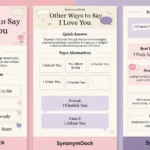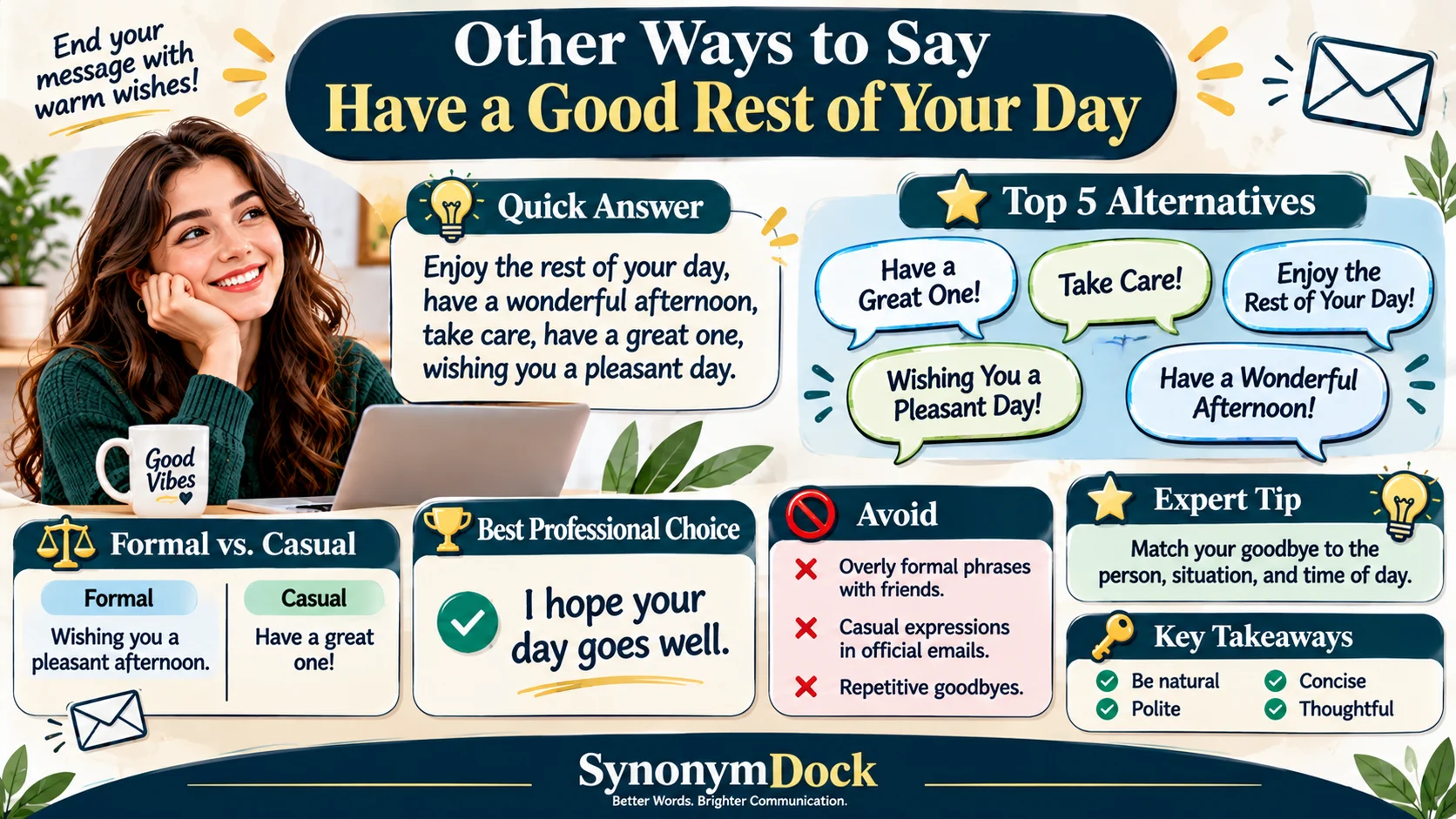
Other ways to say have a good rest of your day include enjoy the rest of your day, have a wonderful afternoon, take care, wishing you a pleasant day, and hope your day goes well. These phrases work in emails, conversations, and professional settings.
Ending a conversation with a thoughtful goodbye can leave a positive impression. Have a good rest of your day is friendly, polite, and widely understood, but repeating it constantly can make your communication feel predictable.
Learning alternatives to this phrase helps you sound more natural, confident, and expressive. Whether you’re replying to a customer, finishing an email, speaking with a teacher, or saying goodbye to a friend, choosing the right expression can make your message feel warmer and more appropriate.
In this guide, you’ll discover ten useful expressions, their meanings, examples, and tone differences. You’ll also learn when to use formal, professional, casual, and everyday English phrases without sounding unnatural.
Quick Categories: Alternatives by Tone
Formal Alternatives
- I wish you a pleasant remainder of your day.
- May the rest of your day be enjoyable.
- Wishing you a pleasant afternoon.
- I hope the remainder of your day goes smoothly.
Pro Tip: Formal expressions work well when speaking with clients, senior colleagues, unfamiliar people, or professional contacts.
Professional Alternatives
- Enjoy the rest of your day.
- Wishing you a productive afternoon.
- I hope your day goes well.
- Have a pleasant afternoon.
Pro Tip: Keep workplace goodbyes short, friendly, and sincere. A simple expression usually sounds more professional than an overly elaborate one.
Business Email Alternatives
- Thank you, and enjoy the rest of your day.
- Wishing you a pleasant afternoon.
- I hope you have a productive rest of your day.
- Thanks again. Have a great afternoon.
Pro Tip: Combine your goodbye with a thank-you when closing customer emails, business conversations, or follow-up messages.
Academic Alternatives
- Have a productive day ahead.
- I hope the rest of your day goes well.
- Wishing you a pleasant afternoon.
- Enjoy the remainder of your day.
Pro Tip: Use respectful, natural language when communicating with teachers, professors, classmates, and academic staff.
Casual Alternatives
- Have a great one!
- Enjoy your day!
- Take care!
- Have a good afternoon!
Pro Tip: Casual expressions are perfect for classmates, friends, familiar coworkers, and everyday interactions.
Informal Expressions
- Catch you later!
- See you around!
- Hope the rest of your day is awesome!
- Take it easy!
Pro Tip: Use informal expressions when the conversation is relaxed and the person already knows you well.
What Does “Have a Good Rest of Your Day” Mean?
Have a good rest of your day is a polite expression used when saying goodbye while someone still has time left in their day. It communicates goodwill and hopes that the person’s remaining hours will be pleasant, productive, or peaceful.
The phrase is commonly used in workplaces, shops, emails, phone calls, and everyday conversations. It is especially appropriate during afternoon conversations or whenever the day is already underway.
Grammar and Meaning
The expression combines an imperative verb, have, with a positive wish. The phrase rest of your day refers to the remaining portion of the current day.
Example:
Thanks for helping me with this project. Have a good rest of your day!
It’s grammatically correct, polite, and suitable for most situations. The expression doesn’t sound overly formal or overly familiar.
When Should You Use These Expressions?
Choosing the right phrase depends on the setting, relationship, and communication style.
Business Communication
Use friendly, professional expressions when finishing a discussion with clients, managers, teammates, or business partners.
Example: Thanks for your time today. Enjoy the rest of your day.
Emails
A short closing line can make an email feel more thoughtful without adding unnecessary words.
Example: Thank you for the update. I hope the rest of your day goes smoothly.
Meetings
When a meeting finishes early or concludes a discussion, a positive closing can help everyone leave on a good note.
Example: Thanks, everyone, for your contributions. Have a productive afternoon.
Presentations
At the end of a presentation, you can use a friendly closing before inviting questions or thanking the audience.
Example: Thank you for listening. I hope you enjoy the rest of your day.
Academic Communication
Students can use respectful expressions when emailing teachers, communicating with classmates, or leaving a study group.
Example: Thank you for explaining the topic. Have a pleasant afternoon.
Interviews
When ending an interview or professional conversation, polite and confident expressions can leave a positive final impression.
Example: Thank you for your time and consideration. I hope you have a wonderful afternoon.
Daily Conversations
With friends, neighbors, classmates, and familiar people, shorter expressions often feel more natural.
Example: Alright, see you later! Have a great one.
Polite, Professional, Formal, and Natural: What’s the Difference?
These expressions may communicate the same good intention, but their tone changes depending on word choice.
| Style | Example | Best Situation |
|---|---|---|
| Polite | I hope you enjoy the rest of your day. | Customer conversations |
| Professional | Enjoy the rest of your day. | Workplace communication |
| Formal | I wish you a pleasant remainder of your day. | Formal correspondence |
| Natural | Have a great afternoon! | Everyday conversations |
Polite phrases show respect and consideration. Professional phrases balance friendliness with workplace manners. Formal expressions use more careful language, while natural expressions sound relaxed and familiar.
Pros and Cons of Using Different Day-End Expressions
Pros
- Avoid repetition: Use different expressions instead of repeating the same goodbye.
- Build stronger communication: Thoughtful closings make conversations feel more complete.
- Adjust your tone: Choose phrases that match formal, professional, or casual situations.
- Sound more natural: Learn everyday English expressions commonly used in conversations.
Cons
- Overly formal wording: Some phrases may sound stiff in casual conversations.
- Wrong context: A relaxed goodbye may not suit a formal business email.
- Unnecessary repetition: Adding a long closing after every short message can feel awkward.
- Unfamiliar expressions: Uncommon phrases may confuse English learners or international readers.
The best expression is usually the shortest one that fits the situation and sounds sincere.
Other Ways to Say Have a Good Rest of Your Day (With Examples)
Here are ten alternatives arranged by usefulness, naturalness, and how often you may encounter them in everyday English.
1. Enjoy the Rest of Your Day
Meaning: A friendly wish that someone enjoys the remaining hours of their day.
Explanation: This is one of the most natural alternatives to have a good rest of your day. It sounds warm, polite, and easygoing without being overly formal.
Example Sentence: Thanks for stopping by today. Enjoy the rest of your day!
Best Use: Everyday and workplace
Avoid Using In: Serious conversations
Tone: Warm, friendly
Formality Level: ⭐⭐⭐⭐
Usage Frequency: Very Common
CEFR Level: B1
Common Collocations:
- Enjoy the rest of your afternoon
- Enjoy the rest of your evening
- Enjoy your day off
- Enjoy the rest of your weekend
Context Examples:
- Spoken English: Thanks for your help. Enjoy the rest of your day!
- Professional English: It was great speaking with you. Enjoy the rest of your day.
- Casual Conversation: Alright, enjoy the rest of your day!
2. Have a Wonderful Afternoon
Meaning: A cheerful wish for someone to experience a pleasant afternoon.
Explanation: This phrase feels slightly warmer and more expressive than have a good rest of your day. Use it when it’s afternoon or when you know the person still has time to enjoy their day.
Example Sentence: Thanks for the quick update. Have a wonderful afternoon!
Best Use: Polite daily conversations
Avoid Using In: Morning conversations
Tone: Cheerful, polite
Formality Level: ⭐⭐⭐⭐
Usage Frequency: Common
CEFR Level: B1
Common Collocations:
- Have a wonderful afternoon
- Have a lovely afternoon
- Have a pleasant afternoon
- Have a fantastic afternoon
Context Examples:
- Spoken English: See you tomorrow. Have a wonderful afternoon!
- Professional English: Thank you for your time. Have a wonderful afternoon.
- Casual Conversation: Hope your afternoon is wonderful!
3. I Hope Your Day Goes Well
Meaning: A sincere wish that everything goes smoothly during the person’s day.
Explanation: This expression is slightly more thoughtful because it focuses on how the person’s day unfolds. It works particularly well when someone has plans, responsibilities, or something important to complete.
Example Sentence: Good luck with your appointment. I hope your day goes well.
Best Use: Meetings and daily life
Avoid Using In: Quick informal exits
Tone: Considerate, sincere
Formality Level: ⭐⭐⭐⭐
Usage Frequency: Common
CEFR Level: B1
Common Collocations:
- Hope your day goes well
- Hope everything goes smoothly
- Hope things work out
- Hope today goes smoothly
Context Examples:
- Spoken English: Good luck today. I hope your day goes well.
- Professional English: I hope everything goes well with your scheduled meeting.
- Casual Conversation: Hope everything goes smoothly today!
4. Wishing You a Pleasant Day
Meaning: A polite expression wishing someone a comfortable and enjoyable day.
Explanation: This phrase is more formal and polished than have a good rest of your day. It suits customer service, professional correspondence, and situations where you want to remain courteous.
Example Sentence: Thank you for contacting our office. Wishing you a pleasant day.
Best Use: Formal communication
Avoid Using In: Close friends
Tone: Courteous, polished
Formality Level: ⭐⭐⭐⭐⭐
Usage Frequency: Common
CEFR Level: B2
Common Collocations:
- Wishing you a pleasant day
- Wishing you a lovely afternoon
- Wishing you a productive day
- Wishing you all the best
Context Examples:
- Spoken English: Thank you for visiting. Wishing you a pleasant day.
- Professional English: We appreciate your inquiry and wish you a pleasant day.
- Casual Conversation: Have a nice day!
5. Have a Great One!
Meaning: A casual way of wishing someone a good day or a pleasant time.
Explanation: The word one replaces day, afternoon, or another understood period. It’s common in casual spoken English and sounds friendly without requiring a detailed goodbye.
Example Sentence: Thanks for picking up the package. Have a great one!
Best Use: Casual conversations
Avoid Using In: Formal letters
Tone: Relaxed, upbeat
Formality Level: ⭐⭐⭐
Usage Frequency: Very Common
CEFR Level: B1
Common Collocations:
- Have a great one
- Have a good one
- Have an awesome one
- Have a nice one
Context Examples:
- Spoken English: Thanks! Have a great one.
- Professional English: Thanks for your time today. Have a great one!
- Casual Conversation: See you later. Have a good one!
Native Speaker Tip: Alternatives 1–5
- Most natural: Enjoy the rest of your day.
- Most professional: I hope your day goes well.
- Less common: Wishing you a pleasant day.
- Native preference: Short, sincere expressions are often preferred over lengthy goodbyes. Have a great one is especially natural in relaxed conversations.
6. Have a Productive Rest of Your Day
Meaning: A wish that someone accomplishes useful tasks or makes good progress during the rest of their day.
Explanation: This expression focuses on productivity rather than enjoyment. It works particularly well with colleagues, classmates, project teams, and people who are continuing their work.
Example Sentence: We’ve covered everything for today. Have a productive rest of your day.
Best Use: Workplace and study
Avoid Using In: Leisure conversations
Tone: Encouraging, professional
Formality Level: ⭐⭐⭐⭐
Usage Frequency: Occasional
CEFR Level: B2
Common Collocations:
- Have a productive day
- Productive afternoon ahead
- Make good progress
- Finish the day strong
Context Examples:
- Spoken English: Good luck with your assignments. Have a productive day!
- Professional English: Thank you for the meeting. Have a productive rest of your day.
- Casual Conversation: Hope you get everything done today!
7. Take Care!
Meaning: A friendly expression showing consideration for someone’s well-being.
Explanation: Take care works as a simple goodbye in both professional and casual situations. It doesn’t specifically wish someone a good day, but it communicates warmth and goodwill.
Example Sentence: Thanks for the conversation. Take care!
Best Use: Everyday goodbyes
Avoid Using In: Highly formal letters
Tone: Warm, considerate
Formality Level: ⭐⭐⭐
Usage Frequency: Very Common
CEFR Level: B1
Common Collocations:
- Take care
- Take good care
- Take care of yourself
- Take care out there
Context Examples:
- Spoken English: See you soon. Take care!
- Professional English: Thanks for your time. Take care.
- Casual Conversation: Alright, take care!
8. Hope the Rest of Your Day Is Amazing
Meaning: A cheerful wish that the remaining part of someone’s day feels especially enjoyable.
Explanation: This phrase adds enthusiasm and personality to a goodbye. It’s more expressive than a standard professional closing, making it suitable for friendly conversations and positive messages.
Example Sentence: It was lovely catching up with you. Hope the rest of your day is amazing!
Best Use: Friendly conversations
Avoid Using In: Formal business letters
Tone: Enthusiastic, upbeat
Formality Level: ⭐⭐⭐
Usage Frequency: Occasional
CEFR Level: B1
Common Collocations:
- Hope your day is amazing
- Have an amazing afternoon
- Have a fantastic day
- Hope today is a great day
Context Examples:
- Spoken English: Hope the rest of your day is amazing!
- Professional English: Thanks for connecting today. Hope your afternoon goes well.
- Casual Conversation: Hope today turns out awesome!
9. Have a Nice Afternoon
Meaning: A simple wish for someone to have a pleasant afternoon.
Explanation: This is a familiar, polite expression that works in shops, offices, classrooms, and everyday interactions. It’s especially useful when you want a straightforward goodbye without sounding overly enthusiastic.
Example Sentence: Thanks for your assistance. Have a nice afternoon.
Best Use: Everyday polite closing
Avoid Using In: Morning greetings
Tone: Simple, courteous
Formality Level: ⭐⭐⭐⭐
Usage Frequency: Very Common
CEFR Level: B1
Common Collocations:
- Have a nice afternoon
- Have a nice evening
- Have a pleasant afternoon
- Enjoy your afternoon
Context Examples:
- Spoken English: Goodbye. Have a nice afternoon.
- Professional English: Thank you for your assistance. Have a nice afternoon.
- Casual Conversation: Have a good afternoon!
10. Hope Everything Goes Smoothly Today
Meaning: A thoughtful wish that someone’s activities or plans happen without problems.
Explanation: This expression is especially useful when someone has a busy schedule, an appointment, an important event, or a challenging task ahead. It sounds caring without becoming overly personal.
Example Sentence: Good luck with the presentation. Hope everything goes smoothly today.
Best Use: Busy days and events
Avoid Using In: Routine quick exits
Tone: Supportive, thoughtful
Formality Level: ⭐⭐⭐⭐
Usage Frequency: Common
CEFR Level: B2
Common Collocations:
- Everything goes smoothly
- Hope things work out
- Have a smooth day
- Good luck with everything
Context Examples:
- Spoken English: Good luck today. Hope everything goes smoothly!
- Professional English: I hope your scheduled tasks go smoothly this afternoon.
- Casual Conversation: Hope everything goes great today!
Native Speaker Tip: Alternatives 6–10
- Most natural: Take care or have a nice afternoon.
- Most professional: Have a productive rest of your day.
- Less common: Hope the rest of your day is amazing.
- Native preference: Speakers often choose a goodbye based on the other person’s plans. Have a productive day fits work, while hope everything goes smoothly feels supportive.
SERP Analysis and Content Gaps
SEO research snapshot
A review of currently surfaced search results shows that most pages focus on lists of alternative phrases, basic examples, and formal or casual wording. Some pages also explain email usage and phrase meanings. definegrammar.com+3
What Existing Articles Commonly Cover
- Alternative phrases organized by formal, casual, and professional tone
- Short example sentences
- Email and customer service situations
- Basic explanations of what the phrase means
- General advice about choosing the right goodbye
Content Gaps Worth Addressing
- Detailed tone and formality comparisons for each phrase
- Academic and workplace examples in separate contexts
- Clear guidance on which phrases feel natural versus overly formal
- Mistakes that English learners commonly make
- Practice questions with answers
- Useful distinctions between good day, good afternoon, take care, and have a good one
Featured Snippet Opportunities
The strongest opportunities for this keyword include:
- A direct 30-word answer
- A concise list of ten alternatives
- A comparison table explaining tone and context
- FAQs about professional emails and everyday speech
- Scenario-based examples readers can apply immediately
Editorial approach: Focus on teaching readers how to choose the right expression, not simply giving them a longer synonym list. These comparisons and examples provide more practical value than phrase lists alone.
Common Mistakes When Using Day-End Expressions
Even simple goodbye expressions can sound awkward when used in the wrong context. Here are five mistakes worth avoiding.
1. Using an Afternoon Phrase in the Morning
Wrong usage: Have a wonderful afternoon! at 9:00 a.m.
Why incorrect: The phrase refers to the afternoon, which hasn’t started yet.
Correct phrase: Have a great day!
Example: Thanks for your help this morning. Have a great day!
2. Using Casual Expressions in Formal Emails
Wrong usage: Catch you later! in an official email to an unfamiliar client.
Why incorrect: It sounds too relaxed and may not match a formal business relationship.
Correct phrase: I hope you have a pleasant afternoon.
Example: Thank you for your time. I hope you have a pleasant afternoon.
3. Making a Goodbye Too Complicated
Wrong usage: I sincerely hope that all the remaining hours of your day are exceptionally wonderful and enjoyable.
Why incorrect: The sentence sounds unnecessarily long for a simple farewell.
Correct phrase: Enjoy the rest of your day.
Example: Thanks for the update. Enjoy the rest of your day.
4. Confusing Rest With Sleeping
Wrong usage: Saying have a good rest of your day when you mean someone should go and sleep.
Why incorrect: Here, rest means the remaining part of the day, not relaxation or sleep.
Correct phrase: Get some rest.
Example: You’ve had a busy day. Get some rest tonight.
5. Repeating the Same Phrase in Every Message
Wrong usage: Ending every email with the exact same expression.
Why incorrect: Repetition can make your communication sound automatic, especially when you’re writing several messages.
Correct phrase: Rotate between natural expressions.
Example: Enjoy the rest of your day, have a pleasant afternoon, or take care, depending on the situation.
Expert Insight: Choosing the Right Phrase
The best expression depends on the person you’re talking to and what they’re doing next.
Workplace Communication
For colleagues and managers, have a productive rest of your day works when they’re continuing with work. Enjoy the rest of your day is more flexible and suits most workplace conversations.
Email Writing
Email closings should match the message. After sharing information, try Thank you, and enjoy the rest of your day. After a formal discussion, I hope your day goes well may feel more appropriate.
Academic English
Students and teachers can use have a productive day when discussing coursework, assignments, or study plans. Wishing you a pleasant afternoon is suitable for respectful communication.
Professional Tone
Professional English doesn’t always mean using complicated words. Simple phrases often sound clearer, friendlier, and more confident than formal language used unnecessarily.
Quick Recap: The Best Alternatives
Best phrases by situation
Best Professional Choice
I hope your day goes well.
Best Casual Choice
Have a great one!
Best Formal Choice
Wishing you a pleasant day.
Most Natural Choice
Enjoy the rest of your day.
Most Polite Choice
I hope you have a pleasant afternoon.
Comparison Table: All 10 Alternatives
| Phrase | Tone | Formality | Best Use | Frequency |
|---|---|---|---|---|
| Enjoy the rest of your day | Friendly | Medium | General conversation | Very Common |
| Have a wonderful afternoon | Cheerful | Medium-High | Afternoon greetings | Common |
| I hope your day goes well | Sincere | Medium-High | Work and daily life | Common |
| Wishing you a pleasant day | Courteous | High | Formal communication | Common |
| Have a great one | Casual | Low-Medium | Spoken English | Very Common |
| Have a productive rest of your day | Professional | High | Work and study | Occasional |
| Take care | Warm | Medium | Everyday goodbyes | Very Common |
| Hope the rest of your day is amazing | Enthusiastic | Medium | Friendly conversations | Occasional |
| Have a nice afternoon | Neutral | Medium | Polite daily interactions | Very Common |
| Hope everything goes smoothly today | Supportive | Medium-High | Busy days and events | Common |
Best Choice: Which Expression Should You Use?
Best Overall: Enjoy the Rest of Your Day
This expression is flexible, friendly, and easy to use. It fits most conversations, emails, and customer interactions without sounding too formal or too casual.
Best Professional: I Hope Your Day Goes Well
This phrase feels thoughtful without being overly personal. It works well with colleagues, clients, teachers, and people you communicate with professionally.
Best Academic: Have a Productive Rest of Your Day
Use this expression when discussing assignments, projects, study sessions, or academic responsibilities. It encourages progress while maintaining a polite tone.
Best Business Email: Wishing You a Pleasant Afternoon
This is a polished closing for business correspondence, customer communication, and professional follow-ups. It sounds courteous without becoming overly complicated.
Best Everyday Conversation: Have a Great One!
This short phrase is friendly and relaxed. It’s especially useful when ending a conversation with a classmate, familiar coworker, neighbor, or friend.
Most Natural: Enjoy the Rest of Your Day
It’s an easy choice when you want to sound fluent and avoid awkward wording. The expression feels appropriate in many situations without needing extra explanation.
Most Polite: I Hope You Have a Pleasant Afternoon
This phrase communicates respect and consideration. It’s particularly useful when speaking to someone you don’t know well or when maintaining a courteous tone.
Commonly Confused Phrases
Several expressions seem similar but communicate slightly different meanings.
| Phrase | Meaning | Tone | When to Use |
|---|---|---|---|
| Have a good day | Wishes someone a good overall day | Neutral | Earlier in the day |
| Enjoy the rest of your day | Wishes someone enjoyment for remaining hours | Friendly | Midday onward |
| Have a good afternoon | Wishes someone well during the afternoon | Polite | Afternoon |
| Take care | Wishes someone well-being | Warm | Any time |
| Have a good one | Casual goodbye for the day or occasion | Relaxed | Informal situations |
| Get some rest | Encourages relaxation or sleep | Caring | When someone is tired |
Have a Good Day vs. Enjoy the Rest of Your Day
Have a good day is suitable throughout much of the day, particularly earlier on. Enjoy the rest of your day makes more sense when several hours have already passed.
Take Care vs. Have a Good One
Take care expresses goodwill toward someone’s well-being. Have a good one is a relaxed way of wishing them a positive experience for the rest of their day.
Have a Good Afternoon vs. Have a Productive Afternoon
Have a good afternoon is a general wish. Have a productive afternoon focuses more on getting tasks completed or making progress.
Scenario Practice: Choose the Right Phrase
Try selecting the most suitable expression for each situation before reading the answer.
Situation 1: Business Meeting
You finish a meeting with your teammates, and everyone still has tasks to complete.
Which phrase would you choose?
Answer: Have a productive rest of your day.
It fits a work setting because it encourages people to make progress. It sounds positive without being too casual.
Situation 2: Interview
You finish an interview with a hiring manager and want to leave a courteous impression.
Which phrase would you choose?
Answer: I hope you have a pleasant afternoon.
This expression is respectful, polished, and suitable for a professional conversation.
Situation 3: Presentation
You finish a presentation and thank your audience before leaving.
Which phrase would you choose?
Answer: Thank you for listening. Enjoy the rest of your day.
It creates a friendly closing while keeping the presentation professional.
Situation 4: Classroom Discussion
You finish talking with your classmate about an assignment.
Which phrase would you choose?
Answer: Have a great one!
This relaxed expression works well between classmates who are familiar with each other.
Situation 5: Email Reply
You respond to a customer who has thanked you for solving their problem.
Which phrase would you choose?
Answer: Thank you, and enjoy the rest of your day.
This combines appreciation with a positive closing. It’s friendly, professional, and appropriate for customer communication.
Mini Quiz: Test Your English Vocabulary
Choose the most suitable phrase for each question.
1. Which phrase is most appropriate for a formal client email?
- A. Catch you later!
- B. Wishing you a pleasant afternoon.
- C. Have an awesome one!Answer: B2. Which phrase sounds most casual and natural among familiar coworkers?
- A. Have a great one!
- B. I wish you a pleasant remainder of the day.
- C. May your afternoon be productive.Answer: A3. What does rest mean in have a good rest of your day?
- A. Sleep
- B. A break from work
- C. The remaining part of the dayAnswer: C4. Which phrase best suits someone preparing for an important presentation?
- A. Hope everything goes smoothly today.
- B. Catch you whenever.
- C. Have a good one, I guess.Answer: A5. Which expression is a polite, general afternoon goodbye?
- A. Have a nice afternoon.
- B. Get some sleep.
- C. See you next year.Answer: A
FAQs
1. What is the most natural way to say have a good rest of your day?
Enjoy the rest of your day is one of the most natural alternatives. It works in professional settings, everyday conversations, customer interactions, and emails because it sounds friendly, clear, and polite.
2. How do you say have a good rest of your day professionally?
You can say I hope your day goes well, wishing you a pleasant afternoon, or enjoy the rest of your day. These expressions maintain a professional tone while making emails and workplace conversations sound warm.
3. Is have a good rest of your day grammatically correct?
Yes, have a good rest of your day is grammatically correct. The word rest refers to the remaining hours, not sleep. It’s a polite farewell commonly used after conversations, meetings, and customer interactions.
4. What is a casual way to say have a good rest of your day?
Have a great one, take care, and enjoy your day are casual alternatives. They’re suitable for friends, classmates, familiar coworkers, and relaxed conversations when a formal goodbye feels unnecessary.
5. Can I use enjoy the rest of your day in an email?
Yes, enjoy the rest of your day works well in professional emails. It creates a friendly closing without sounding overly formal. Pair it with a thank-you when replying to clients, colleagues, or customers.
Conclusion
Learning other ways to say have a good rest of your day gives you more flexibility in English communication. From professional emails and academic discussions to friendly conversations, the right expression helps you match your tone to the situation. Phrases such as enjoy the rest of your day, have a great one, and wishing you a pleasant afternoon are easy to remember and useful in everyday life.
Practice using these expressions in real conversations rather than memorizing them alone. Pay attention to how people adjust their wording in different situations, and choose phrases that feel sincere. With regular practice, you’ll sound more confident, natural, and comfortable in spoken and written English.