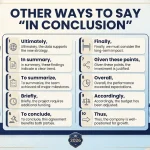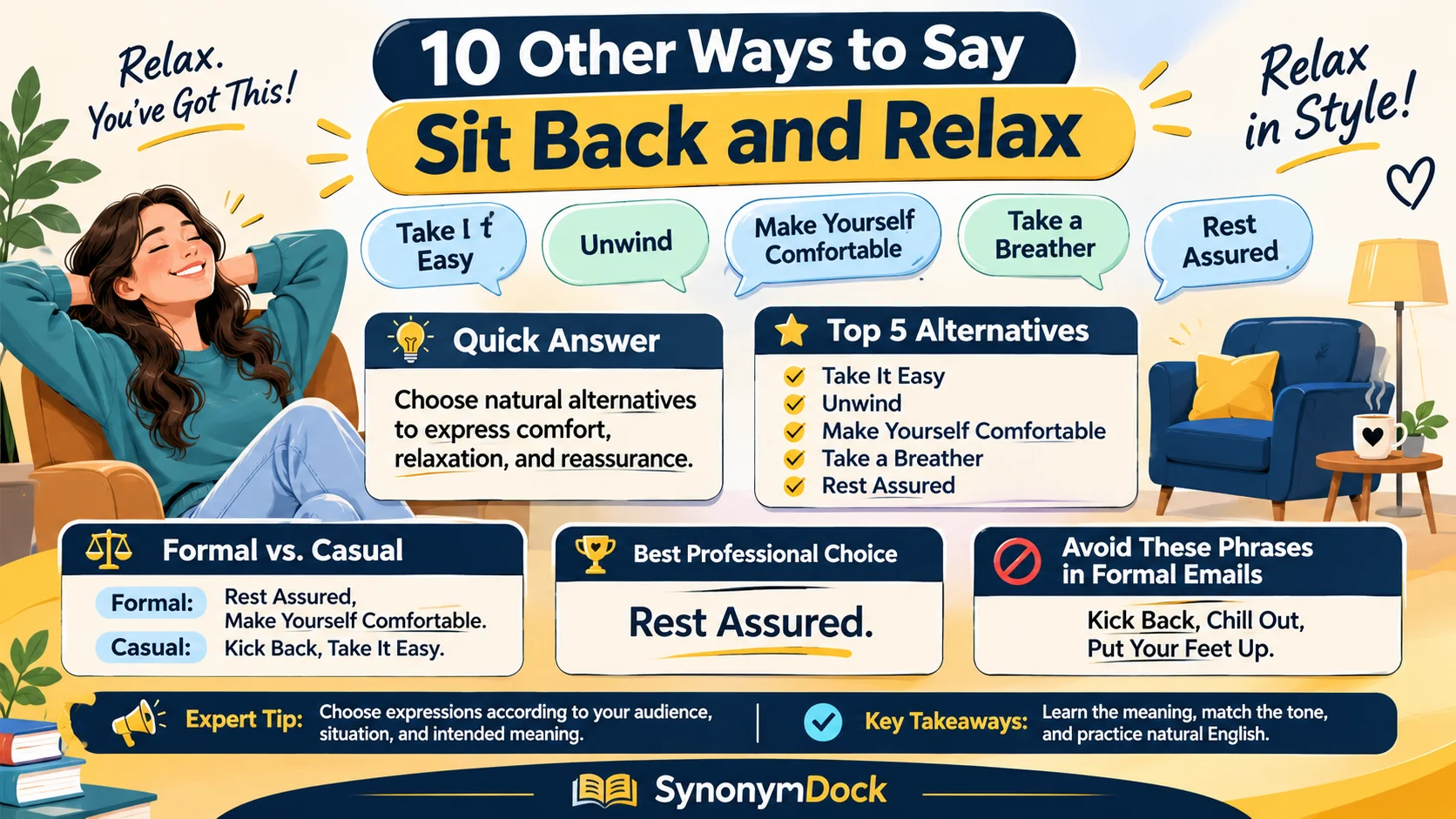
Other ways to say sit back and relax include take it easy, unwind, make yourself comfortable, take a breather, and put your feet up. These alternatives help you express comfort, calmness, and reassurance naturally.
The phrase sit back and relax is a friendly way to tell someone to stop worrying, get comfortable, and enjoy the moment. It works well in everyday conversations, but using the same expression repeatedly can make your communication sound less interesting.
Learning other ways to say sit back and relax helps you choose words that match different situations. Whether you’re writing a business email, welcoming a guest, participating in a meeting, or speaking with friends, the right expression makes your English sound more natural.
Some alternatives are professional and polite, while others are casual and conversational. Understanding their meanings and tones will help you communicate confidently with different audiences.
Formal Alternatives
- Please feel at ease.
- Kindly make yourself comfortable.
- Please take a moment to unwind.
- Allow yourself some time to rest.
Pro Tip: Choose polite, complete expressions when addressing clients, visitors, or people you don’t know well.
Professional Alternatives
- Take a short break.
- Feel free to relax.
- Take a moment to recharge.
- Let us handle the details.
Pro Tip: In professional communication, explain what your team is handling rather than simply telling someone to relax.
Business Email Alternatives
- Rest assured.
- We have everything under control.
- Please leave the arrangements to us.
- No further action is needed from your side.
Pro Tip: Pair reassurance with a clear update so the recipient understands why they can feel comfortable.
Academic Alternatives
- Take a moment to pause.
- Allow yourself time to recharge.
- Take a short break from studying.
- Settle in and focus.
Pro Tip: Use clear expressions instead of slang in essays, academic instructions, and formal classroom communication.
Casual Alternatives
- Take it easy.
- Kick back.
- Put your feet up.
- Just unwind.
Pro Tip: These expressions work naturally with friends, family, and people you know well.
Informal Expressions
- Chill out.
- Take a load off.
- Hang loose.
- Lounge around.
Pro Tip: Informal expressions are great for relaxed conversations but usually unsuitable for formal business writing.
What Does “Sit Back and Relax” Mean?
Sit back and relax means to become comfortable, stop worrying, and enjoy a situation without unnecessary effort or stress.
The expression has two parts:
- Sit back: Lean comfortably against a chair or seat, or take a less active role.
- Relax: Release tension and allow yourself to feel comfortable.
Together, they create an invitation to rest, enjoy something, or trust that a situation is being handled.
Example: Sit back and relax while our team prepares your presentation.
Grammar explanation: The expression is an imperative phrase. It uses the base forms of the verbs “sit” and “relax” to give a friendly instruction or suggestion.
When Should You Use These Expressions?
Choosing an alternative depends on your audience and purpose.
- Business communication: Use “We have everything under control” when reassuring colleagues or clients.
- Emails: Use “Rest assured” when providing confidence about a completed action or ongoing task.
- Meetings: Say “Take a moment to recharge” when suggesting a short pause.
- Presentations: Use “Make yourself comfortable” when welcoming an audience.
- Academic writing: Choose “pause,” “take a break,” or “allow time for rest.”
- Interviews: Use “Please feel at ease” to create a welcoming atmosphere.
- Daily conversations: Say “Take it easy” or “kick back” when speaking with friends.
Professional vs. Polite: What’s the Difference?
These expressions may communicate relaxation, but their tones are different.
Polite: “Please make yourself comfortable.”
This sounds welcoming and respectful. It works when hosting visitors or greeting customers.
Professional: “We have everything under control.”
This communicates responsibility and reassurance without sounding overly casual.
Formal: “Please rest assured that your request is receiving our attention.”
This is appropriate for formal letters and business correspondence.
Natural: “Take it easy and enjoy your evening.”
This sounds friendly and relaxed in everyday English.
Remember that professional language doesn’t always need complicated vocabulary. Clear, respectful expressions are usually more effective.
Pros and Cons of Using Alternatives
Pros
- Better vocabulary: Learning alternatives makes your English more varied.
- Improved communication: You can express relaxation, reassurance, and comfort more accurately.
- Professional confidence: You can select suitable expressions for workplace situations.
- Natural conversations: Different phrases help your speech sound less repetitive.
- Better writing: You can adjust your tone for emails, articles, and academic assignments.
Cons
- Different meanings: Not every alternative communicates exactly the same idea.
- Formality problems: Casual expressions may sound inappropriate in official messages.
- Possible confusion: Idioms such as “take a load off” may confuse beginners.
- Unnatural combinations: Using formal expressions in friendly conversations can sound stiff.
- Context matters: A phrase encouraging rest might sound dismissive when someone needs practical help.
Other Ways to Say “Sit Back and Relax” (With Examples)
Here are 10 useful alternatives, arranged from versatile everyday expressions to more context-specific phrases.
Take It Easy
Meaning: Slow down, avoid unnecessary stress, and enjoy a comfortable moment.
Explanation: This is a natural, friendly expression used in everyday English. It can suggest resting, reducing pressure, or not worrying too much.
Example Sentence: You’ve worked hard all week, so take it easy this weekend.
Best Use: Everyday conversations.
Avoid Using In: Formal academic writing.
Tone: Friendly, supportive.
Formality Level: ⭐⭐
Usage Frequency: Very Common.
CEFR Level: B1 (approximate).
Common Collocations: Take it easy today, take it easy this weekend, take it easy for a while, take it easy at home.
Context Examples:
- Spoken English: Take it easy and enjoy your holiday.
- Professional English: Take it easy during your lunch break.
- Casual Conversation: Let’s take it easy tonight.
Unwind
Meaning: Release stress and become mentally or physically relaxed.
Explanation: Unwind is a useful alternative when someone needs time away from work, responsibilities, or busy activities. It sounds natural in both spoken and written English.
Example Sentence: I like to unwind with a good book after work.
Best Use: Lifestyle and wellness.
Avoid Using In: Urgent instructions.
Tone: Calm, relaxed.
Formality Level: ⭐⭐⭐
Usage Frequency: Very Common.
CEFR Level: B2 (approximate).
Common Collocations: Unwind after work, unwind at home, unwind with music, unwind for a while.
Context Examples:
- Spoken English: Let’s unwind after a busy day.
- Professional English: Take some time to unwind after the workshop.
- Casual Conversation: I’m going home to unwind.
Make Yourself Comfortable
Meaning: Get comfortable and feel welcome in a place.
Explanation: This is a polite and welcoming alternative. Hosts, teachers, receptionists, and customer service professionals can use it when inviting someone to settle in.
Example Sentence: Please make yourself comfortable while you wait for the meeting to begin.
Best Use: Welcoming guests.
Avoid Using In: Urgent situations.
Tone: Warm, courteous.
Formality Level: ⭐⭐⭐⭐
Usage Frequency: Very Common.
CEFR Level: B1 (approximate).
Common Collocations: Make yourself comfortable here, make yourself comfortable in the room, make yourself comfortable while waiting.
Context Examples:
- Spoken English: Come in and make yourself comfortable.
- Professional English: Please make yourself comfortable before the presentation.
- Casual Conversation: Grab a seat and make yourself comfortable.
Take a Breather
Meaning: Stop an activity briefly to rest and recover.
Explanation: This expression suggests a short break rather than a long period of relaxation. It’s especially useful after stressful work or an intense discussion.
Example Sentence: We’ve been studying for two hours, so let’s take a breather.
Best Use: Short work breaks.
Avoid Using In: Formal reports.
Tone: Relaxed, practical.
Formality Level: ⭐⭐⭐
Usage Frequency: Common.
CEFR Level: B2 (approximate).
Common Collocations: Take a quick breather, take a breather after work, take a breather between tasks.
Context Examples:
- Spoken English: Let’s take a breather before continuing.
- Professional English: We can take a brief breather before the next session.
- Casual Conversation: Give me a minute to take a breather.
Rest Assured
Meaning: Feel confident that something is being handled properly.
Explanation: Unlike expressions about physical relaxation, this phrase focuses on reassurance. It’s particularly useful when communicating with clients, colleagues, or customers.
Example Sentence: Rest assured, our team is working to resolve the issue.
Best Use: Business reassurance.
Avoid Using In: Casual invitations.
Tone: Reassuring, professional.
Formality Level: ⭐⭐⭐⭐⭐
Usage Frequency: Common.
CEFR Level: C1 (approximate).
Common Collocations: Rest assured that, rest assured your request, rest assured everything is progressing.
Context Examples:
- Spoken English: Rest assured, everything is being handled.
- Professional English: Please rest assured that your application is under review.
- Casual Conversation: You can rest assured that I’ll help.
Native Speaker Tip: Alternatives 1–5
- Most natural: Take it easy. It fits many everyday conversations.
- Most professional: Rest assured. It communicates confidence and responsibility.
- Less common: Take a breather. It is more specific to short breaks.
- Native preference: Speakers often choose simple expressions over complicated synonyms. Context matters more than vocabulary difficulty.
Take a Break
Meaning: Stop working or participating in an activity temporarily.
Explanation: This is one of the clearest and most widely understood alternatives. It works in classrooms, offices, and everyday conversations.
Example Sentence: You’ve completed the first assignment, so take a break before starting the next one.
Best Use: Work and study.
Avoid Using In: Continuous urgent tasks.
Tone: Neutral, practical.
Formality Level: ⭐⭐⭐
Usage Frequency: Very Common.
CEFR Level: A2–B1 (approximate).
Common Collocations: Take a short break, take a lunch break, take a well-deserved break, take a five-minute break.
Context Examples:
- Spoken English: Let’s take a break.
- Professional English: Please take a short break before the next session.
- Casual Conversation: I’m taking a break from studying.
Feel Free to Relax
Meaning: Gives someone permission to become comfortable and stop feeling pressured.
Explanation: This phrase is polite and gentle. It is particularly useful when someone feels they need to remain busy or overly formal.
Example Sentence: Feel free to relax while we prepare the meeting room.
Best Use: Welcoming situations.
Avoid Using In: Serious urgent matters.
Tone: Gentle, polite.
Formality Level: ⭐⭐⭐⭐
Usage Frequency: Common.
CEFR Level: B2 (approximate).
Common Collocations: Feel free to relax here, feel free to take a break, feel free to get comfortable.
Context Examples:
- Spoken English: Feel free to relax while you wait.
- Professional English: Feel free to take a moment to recharge.
- Casual Conversation: Feel free to relax; there’s no rush.
Put Your Feet Up
Meaning: Sit comfortably and enjoy some rest, especially after hard work.
Explanation: This friendly idiom creates a picture of someone relaxing at home. It’s common in casual English, particularly when encouraging someone to enjoy their free time.
Example Sentence: You’ve cleaned the entire house, so put your feet up and enjoy the afternoon.
Best Use: Home relaxation.
Avoid Using In: Formal business emails.
Tone: Friendly, informal.
Formality Level: ⭐⭐
Usage Frequency: Common.
CEFR Level: B2 (approximate).
Common Collocations: Put your feet up at home, put your feet up after work, put your feet up for a while.
Context Examples:
- Spoken English: Go put your feet up.
- Professional English: Enjoy your time off after the conference.
- Casual Conversation: Dinner is ready, so put your feet up.
Kick Back
Meaning: Relax casually without worrying about responsibilities for a while.
Explanation: Kick back is an informal phrasal verb. It is popular in casual American English and works well when discussing weekends, holidays, and entertainment.
Example Sentence: Let’s kick back and enjoy the movie tonight.
Best Use: Friendly conversations.
Avoid Using In: Formal correspondence.
Tone: Casual, playful.
Formality Level: ⭐
Usage Frequency: Common.
CEFR Level: B2 (approximate).
Common Collocations: Kick back at home, kick back and enjoy, kick back with friends, kick back after work.
Context Examples:
- Spoken English: Just kick back and enjoy the show.
- Professional English: Take some downtime after the event.
- Casual Conversation: We’re kicking back this evening.
Take a Moment to Yourself
Meaning: Give yourself some personal time to rest, reflect, or recharge.
Explanation: This expression sounds thoughtful and supportive. It works when someone has been busy or needs a little space away from responsibilities.
Example Sentence: You’ve had a busy day, so take a moment to yourself.
Best Use: Personal well-being.
Avoid Using In: Time-critical situations.
Tone: Gentle, supportive.
Formality Level: ⭐⭐⭐
Usage Frequency: Common.
CEFR Level: B2 (approximate).
Common Collocations: Take a quiet moment, take a moment to yourself, take some time for yourself, enjoy a moment of peace.
Context Examples:
- Spoken English: Take a moment to yourself before we continue.
- Professional English: Consider taking a short personal break.
- Casual Conversation: Go relax and take a moment to yourself.
Native Speaker Tip: Alternatives 6–10
- Most natural: Take a break. It is clear and widely understood.
- Most professional: Feel free to relax, particularly in welcoming situations.
- Less common: Put your feet up is more idiomatic and informal.
- Native preference: Speakers choose “kick back” with friends but prefer “take a break” at work.
Expert Insight: Choosing the Right Expression
Professional communication is not simply about replacing informal words with formal ones. It’s about understanding the message you want to communicate.
Workplace communication: Use “take a break” when discussing rest and “rest assured” when providing reassurance.
Email writing: Avoid vague instructions. Instead of telling a client to sit back and relax, explain what your team will handle.
Academic English: Prefer clear expressions such as “pause for a moment” and “take a short break.”
Professional tone: Use polite wording that respects the reader’s situation. Reassurance should always be supported by clear information.
Quick Recap: Best Alternatives
| Purpose | Best Expression |
|---|---|
| Best Professional Choice | Rest assured |
| Best Casual Choice | Kick back |
| Best Formal Choice | Make yourself comfortable |
| Most Natural Choice | Take it easy |
| Most Polite Choice | Feel free to relax |
Comparison Table: All 10 Alternatives
| Phrase | Tone | Formality | Best Use | Frequency |
|---|---|---|---|---|
| Take it easy | Friendly | Low | Everyday speech | Very Common |
| Unwind | Calm | Medium | Relaxation | Very Common |
| Make yourself comfortable | Welcoming | High | Hospitality | Very Common |
| Take a breather | Practical | Medium | Short breaks | Common |
| Rest assured | Reassuring | Very High | Business emails | Common |
| Take a break | Neutral | Medium | Work and study | Very Common |
| Feel free to relax | Polite | High | Welcoming | Common |
| Put your feet up | Informal | Low | Home | Common |
| Kick back | Playful | Very Low | Friends | Common |
| Take a moment to yourself | Supportive | Medium | Personal time | Common |
Best Choice: Which Alternative Should You Use?
Best Overall: Take It Easy
This is a versatile expression that works in everyday conversations. It is simple, friendly, and easy for English learners to understand.
Best Professional: Rest Assured
Choose this when you want to reassure someone that a matter is receiving attention or being handled properly.
Best Academic: Take a Break
It communicates the idea clearly without relying on informal idioms.
Best Business Email: Rest Assured
It sounds professional when followed by a specific update or explanation.
Best Everyday Conversation: Unwind
Use it when discussing relaxing after work, studying, or a busy day.
Most Natural: Take It Easy
It sounds conversational and works in many familiar situations.
Most Polite: Make Yourself Comfortable
It is especially useful when welcoming guests, visitors, or customers.
Commonly Confused Phrases
Some expressions look similar but communicate different ideas.
1. Relax vs. Unwind
- Relax: A general word for becoming comfortable.
- Unwind: Specifically suggests releasing tension after a busy or stressful experience.
Example: I relax at home, but I unwind by listening to music after work.
2. Take It Easy vs. Take a Break
- Take it easy: Reduce stress or avoid unnecessary effort.
- Take a break: Stop an activity temporarily.
Example: Take it easy this weekend, but take a break now if you’re tired.
3. Rest Assured vs. Feel at Ease
- Rest assured: Trust that something is being handled properly.
- Feel at ease: Become comfortable and less nervous.
Example: Rest assured that your order is being processed. Please feel at ease while waiting.
4. Kick Back vs. Put Your Feet Up
- Kick back: Relax casually, often while enjoying entertainment.
- Put your feet up: Rest comfortably, especially after hard work.
Example: Let’s kick back and watch a film. You’ve worked hard, so put your feet up.
Scenario Practice: Choose the Right Expression
Test your understanding with these five everyday situations.
1. Business Meeting
Your manager tells the team that the remaining arrangements are being handled.
Which phrase would you choose?
Answer: Rest assured.
Explanation: It communicates confidence and reassures colleagues professionally.
2. Interview
An interviewer welcomes a nervous candidate into the room.
Which phrase would you choose?
Answer: Please make yourself comfortable.
Explanation: This sounds polite and welcoming without being overly casual.
3. Presentation
Your audience has been listening for a long time and needs a short pause.
Which phrase would you choose?
Answer: Take a breather.
Explanation: It naturally suggests a short break before continuing.
4. Classroom Discussion
Students have completed a difficult exercise and need some time before the next activity.
Which phrase would you choose?
Answer: Take a break.
Explanation: It is simple, clear, and suitable for educational settings.
5. Email Reply
A customer asks whether your team is handling their request.
Which phrase would you choose?
Answer: Rest assured that our team is working on your request.
Explanation: It sounds professional and provides reassurance without using casual slang.
Mini Quiz: Test Your Vocabulary
Choose the most suitable expression for each question.
1. Which expression is most appropriate for reassuring a business client?
A. Kick back
B. Rest assured
C. Chill out
D. Put your feet up
2. Which phrase is most casual?
A. Please feel at ease
B. Rest assured
C. Kick back
D. Take a short break
3. Which expression is best for welcoming a visitor?
A. Make yourself comfortable
B. Chill out
C. Kick back
D. Take it easy
4. Which expression specifically suggests a short pause?
A. Put your feet up
B. Take a breather
C. Rest assured
D. Kick back
5. Which phrase is best for describing relaxation after a stressful day?
A. Unwind
B. Rest assured
C. Make yourself comfortable
D. Remain alert
Answer Key
- B — Rest assured.
- C — Kick back.
- A — Make yourself comfortable.
- B — Take a breather.
- A — Unwind.
FAQs
1. What are the best other ways to say sit back and relax?
The best alternatives include take it easy, unwind, make yourself comfortable, take a breather, and put your feet up. Choose based on whether you mean physical comfort, emotional relaxation, or reassurance.
2. What is a professional way to say sit back and relax?
You can say rest assured, feel free to relax, or let us handle the details. These expressions sound more professional in workplace conversations and business emails, especially when accompanied by clear information.
3. Is sit back and relax formal or informal?
Sit back and relax is generally friendly and informal, although it can work in welcoming professional situations. For formal communication, consider rest assured or please make yourself comfortable instead.
4. How can I say sit back and relax in a business email?
Use expressions such as rest assured, we have everything under control, or no further action is needed from your side. These alternatives communicate reassurance while keeping your message clear and professional.
5. What is the most natural synonym for sit back and relax?
Take it easy is one of the most natural alternatives in everyday English. Unwind is another excellent choice when discussing relaxation after work, studying, or other demanding activities.
Conclusion
Learning other ways to say sit back and relax helps you become a more confident and flexible English communicator. Expressions such as take it easy, unwind, rest assured, and make yourself comfortable each serve different purposes. Understanding their meanings, tones, and appropriate situations makes your vocabulary more useful in everyday conversations, academic work, and professional communication.
Start by practicing two or three expressions each day. Use them in sentences, emails, and conversations to understand how they work naturally. Remember, excellent English isn’t about using complicated words; it’s about choosing the right words at the right time. Keep practicing, and let your vocabulary grow with confidence.