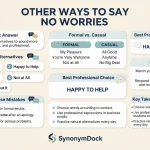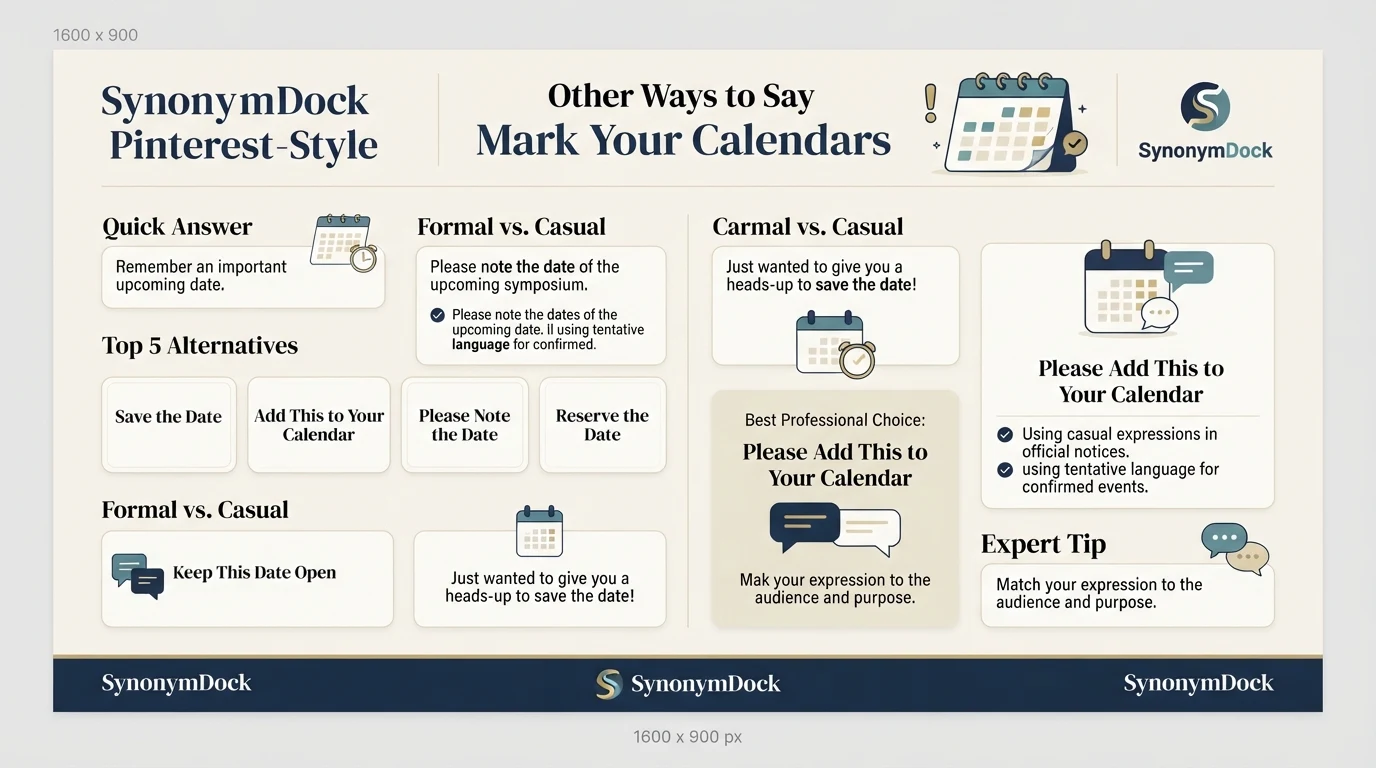
Other ways to say mark your calendars include save the date, add this to your calendar, please note the date, reserve the date, and keep this date open. These alternatives suit professional emails, invitations, meetings, announcements, and casual reminders.
Mark your calendars is a familiar expression used to remind people about an important upcoming date. It encourages readers to remember an event, meeting, deadline, celebration, or special occasion.
However, repeating the same expression can make announcements and emails sound predictable. Learning alternatives helps you communicate with greater clarity and choose language that suits your audience.
Whether you are writing a business email, preparing a classroom announcement, sharing an event invitation, or messaging friends, the right phrase makes your reminder more natural. Understanding tone and context also helps English learners build stronger communication skills.
Quick Categories: Alternatives by Tone
1. Formal Alternatives
- Please reserve this date.
- Kindly note the scheduled date.
- Please take note of this date.
- We request that you reserve this date.
- Please keep this date available.
Pro Tip: Use complete, respectful expressions in official notices, institutional announcements, and formal invitations.
2. Professional Alternatives
- Please add this to your calendar.
- Make a note of the date.
- Please keep this date available.
- Add this event to your schedule.
- Please plan accordingly.
Pro Tip: Choose direct wording when communicating confirmed meetings, deadlines, and workplace events.
3. Business Email Alternatives
- Please note the following date.
- Kindly reserve the date.
- Please update your calendar.
- We look forward to seeing you on this date.
- Please save the date for our upcoming meeting.
Pro Tip: Include the exact date, time, and event details whenever possible.
4. Academic Alternatives
- Please note the examination date.
- Add the submission deadline to your calendar.
- Keep the workshop date available.
- Please remember the scheduled presentation.
- Take note of the upcoming class event.
Pro Tip: Prioritize clarity when communicating examination dates, assignment deadlines, and academic events.
5. Casual Alternatives
- Save the date!
- Circle the date.
- Keep the day free.
- Don’t forget the date.
- Put it on your calendar.
Pro Tip: Friendly expressions work well with classmates, friends, and community groups.
6. Informal Expressions
- Pencil it in!
- Lock it in!
- Don’t miss it!
- Keep that day open!
- Get ready for the big day!
Pro Tip: Use informal expressions in relaxed conversations rather than official business documents.
What Does “Mark Your Calendars” Mean?
Definition: Mark your calendars means to remember an important upcoming date by recording it in a calendar, planner, or digital scheduling application.
In simple English, it means:
Remember this date because something important is happening.
The expression contains two main parts:
- Mark: To highlight, record, or make something noticeable.
- Your calendars: The calendars people use to organize their schedules.
The expression is usually an instruction or friendly reminder. It does not require someone to use a physical calendar.
Example: Mark your calendars for December 15 because our annual school celebration is approaching.
Grammar Explanation
The expression uses the imperative form of the verb mark. It addresses an audience directly, even when the word you is not written.
The plural calendars is common when addressing a group. When speaking to one person, mark your calendar is also correct.
- Correct: Mark your calendars for Friday.
- Correct: Mark your calendar for Friday.
- Incorrect: Mark your calendar’s for Friday.
When Should You Use Alternatives?
Different communication situations require different expressions. Consider these examples before choosing your wording.
| Situation | Recommended expression |
|---|---|
| Business communication | Please add this to your calendar. |
| Professional emails | Please note the following date. |
| Team meetings | Keep this date available. |
| Presentations | Please reserve the date. |
| Academic writing | Please note the examination date. |
| Interviews | Please confirm your availability for this date. |
| Daily conversations | Save the date! |
Important: If attendance is required, explain that clearly. A reminder alone does not tell readers whether participation is optional or mandatory.
Professional vs. Polite vs. Formal vs. Natural
These terms describe different qualities of communication. A phrase can be professional and polite without sounding extremely formal.
| Style | Meaning | Example |
|---|---|---|
| Professional | Suitable for workplace communication | Please add this meeting to your calendar. |
| Polite | Respectful and considerate | Could you please reserve this date? |
| Formal | Appropriate for official communication | Kindly note the scheduled date. |
| Natural | Sounds comfortable in everyday English | Don’t forget about Friday! |
Expert advice: Professional writing should prioritize clarity. Adding unnecessary formal words does not automatically make a message more professional.
Pros and Cons of Using Alternatives
Pros
- Improved vocabulary: Different expressions expand your everyday and professional English.
- Better communication: Specific phrases explain what readers should do.
- Suitable tone: You can adapt reminders for clients, colleagues, teachers, and friends.
- Less repetition: Fresh wording makes announcements more engaging.
- Greater clarity: Some alternatives distinguish between tentative plans and confirmed events.
Cons
- Possible confusion: Some alternatives suggest a stronger commitment than others.
- Wrong tone: Casual expressions may sound unsuitable in official notices.
- Unclear instructions: A short phrase may omit important scheduling details.
- Overly formal writing: Unnecessary formal language can make friendly messages feel distant.
- Misleading urgency: Promotional phrases may create pressure when no urgency exists.
Other Ways to Say “Mark Your Calendars” (With Examples)
Here are 10 useful alternatives, arranged from widely useful professional expressions to less formal options. Each phrase has a different tone and purpose.
1. Save the Date
Meaning: Remember an upcoming event and keep the date available.
Explanation: This is one of the most familiar alternatives. It works particularly well for weddings, conferences, celebrations, and special announcements.
- Formal: Suitable for formal invitations.
- Neutral: Works for general announcements.
- Professional: Appropriate for conferences and company events.
- Casual: Natural for personal celebrations.
Example Sentence: Save the date for our annual conference on December 12.
- Best Use: Event invitations.
- Avoid Using In: Urgent deadlines.
- Tone: Friendly and inviting.
- Formality Level: ⭐⭐⭐⭐
- Usage Frequency: Very Common
- CEFR Level: B1
Common Collocations:
- Save the date for an event.
- Save the date announcement.
- Save the date invitation.
- Save the date card.
Context Examples:
- Spoken English: Save the date for our school celebration!
- Professional English: Please save the date for our annual conference.
- Casual Conversation: Save the date for my birthday party!
2. Please Add This to Your Calendar
Meaning: Record an upcoming event in your personal or work calendar.
Explanation: This phrase gives the reader a clear action. It is especially useful when the date and event details are already confirmed.
- Formal: Suitable for official reminders.
- Neutral: Clear and direct.
- Professional: Excellent for workplace emails.
- Casual: Works in friendly team messages.
Example Sentence: Please add this to your calendar for our team meeting on December 8.
- Best Use: Workplace reminders.
- Avoid Using In: Unconfirmed events.
- Tone: Polite and direct.
- Formality Level: ⭐⭐⭐⭐⭐
- Usage Frequency: Very Common
- CEFR Level: B1
Common Collocations:
- Add an event to your calendar.
- Add the meeting to your calendar.
- Add this date to your schedule.
- Add a reminder to your calendar.
Context Examples:
- Spoken English: Please add our meeting to your calendar.
- Professional English: Kindly add the presentation date to your calendar.
- Casual Conversation: Add Saturday to your calendar!
3. Please Note the Date
Meaning: Pay attention to and remember a particular date.
Explanation: This expression sounds more formal than everyday reminders. It is useful for notices, official announcements, academic schedules, and business communication.
- Formal: Excellent for official notices.
- Neutral: Suitable for general information.
- Professional: Works in business announcements.
- Casual: Can sound slightly stiff.
Example Sentence: Please note the date of our upcoming training session: December 18.
- Best Use: Official announcements.
- Avoid Using In: Friendly chats.
- Tone: Formal and direct.
- Formality Level: ⭐⭐⭐⭐⭐
- Usage Frequency: Common
- CEFR Level: B1
Common Collocations:
- Please note the date.
- Note the scheduled date.
- Note the examination date.
- Note the important deadline.
Context Examples:
- Spoken English: Please note the date of our next session.
- Professional English: Please note the revised meeting date.
- Casual Conversation: Just note the date for Saturday.
4. Reserve the Date
Meaning: Keep a particular date available for an upcoming event.
Explanation: This expression emphasizes availability rather than simply remembering information. It is appropriate when you want people to avoid making conflicting plans.
- Formal: Appropriate for formal invitations.
- Neutral: Suitable for planned events.
- Professional: Works for conferences and seminars.
- Casual: Less common in everyday chats.
Example Sentence: Please reserve the date for our upcoming leadership workshop.
- Best Use: Important events.
- Avoid Using In: Tentative plans.
- Tone: Respectful and formal.
- Formality Level: ⭐⭐⭐⭐⭐
- Usage Frequency: Common
- CEFR Level: B2
Common Collocations:
- Reserve the date.
- Reserve a place.
- Reserve the day.
- Reserve time for an event.
Context Examples:
- Spoken English: Please reserve that date for our celebration.
- Professional English: We kindly request that you reserve the date for the conference.
- Casual Conversation: Reserve that day for our get-together!
5. Keep This Date Open
Meaning: Avoid making other plans for a particular date.
Explanation: This phrase is friendly, clear, and practical. Use it when you want someone to remain available, even if every event detail is not ready.
- Formal: Suitable with polite wording.
- Neutral: Appropriate for general invitations.
- Professional: Useful for preliminary event announcements.
- Casual: Very natural with friends.
Example Sentence: Please keep this date open for our upcoming team celebration.
- Best Use: Future scheduling.
- Avoid Using In: Confirmed appointments.
- Tone: Friendly and polite.
- Formality Level: ⭐⭐⭐
- Usage Frequency: Common
- CEFR Level: B1
Common Collocations:
- Keep the date open.
- Keep the day free.
- Keep your schedule open.
- Keep Friday available.
Context Examples:
- Spoken English: Keep Friday open for our next meeting.
- Professional English: Please keep December 20 available for the workshop.
- Casual Conversation: Keep that day open for us!
Native Speaker Tip (After the First Five)
The most natural general-purpose choices are save the date and add this to your calendar. For workplace communication, please add this to your calendar is especially clear.
Reserve the date sounds more formal, while keep this date open feels warmer. Remember that reserving a date suggests holding time, not merely remembering it.
6. Make a Note of the Date
Meaning: Write down a date so you can remember it later.
Explanation: This is a flexible expression for emails, classroom announcements, meetings, and everyday reminders. It focuses on remembering information rather than promising attendance.
- Formal: Appropriate for notices.
- Neutral: Suitable for most audiences.
- Professional: Excellent for business reminders.
- Casual: Natural in ordinary conversation.
Example Sentence: Please make a note of the date for our final project presentation.
- Best Use: Important reminders.
- Avoid Using In: Urgent invitations.
- Tone: Helpful and neutral.
- Formality Level: ⭐⭐⭐⭐
- Usage Frequency: Very Common
- CEFR Level: B1
Common Collocations:
- Make a note of the date.
- Make a note of the deadline.
- Make a note of the meeting.
- Make a note of the schedule.
Context Examples:
- Spoken English: Make a note of our next class.
- Professional English: Please make a note of the revised deadline.
- Casual Conversation: Make a note of Saturday!
7. Set a Reminder
Meaning: Create an alert to help you remember an upcoming event.
Explanation: This expression is practical and action-oriented. It works especially well when people use phones, digital calendars, or scheduling applications.
- Formal: Suitable for administrative instructions.
- Neutral: Works in most situations.
- Professional: Useful for deadlines and meetings.
- Casual: Very natural in daily conversation.
Example Sentence: Set a reminder for our online meeting next Wednesday.
- Best Use: Digital scheduling.
- Avoid Using In: Traditional invitations.
- Tone: Practical and direct.
- Formality Level: ⭐⭐⭐
- Usage Frequency: Very Common
- CEFR Level: B1
Common Collocations:
- Set a calendar reminder.
- Set a meeting reminder.
- Set a daily reminder.
- Set a reminder for Friday.
Context Examples:
- Spoken English: Set a reminder so you don’t forget.
- Professional English: Please set a reminder for the submission deadline.
- Casual Conversation: Set a reminder for our movie night!
8. Block Off the Date
Meaning: Keep a date or period free from other activities.
Explanation: This phrase suggests actively reserving time in your schedule. It is particularly useful for workshops, meetings, conferences, and focused work sessions.
- Formal: Less suitable for highly formal notices.
- Neutral: Suitable for scheduling.
- Professional: Common in workplace communication.
- Casual: Natural among colleagues and friends.
Example Sentence: Please block off December 22 for our annual planning session.
- Best Use: Work scheduling.
- Avoid Using In: Casual invitations.
- Tone: Direct and confident.
- Formality Level: ⭐⭐⭐
- Usage Frequency: Common
- CEFR Level: B2
Common Collocations:
- Block off your calendar.
- Block off the morning.
- Block off the afternoon.
- Block off time for a meeting.
Context Examples:
- Spoken English: Block off Friday afternoon for the workshop.
- Professional English: Please block off two hours for the strategy meeting.
- Casual Conversation: Block off Saturday for our plans!
9. Pencil It In
Meaning: Make a temporary note of a possible date or arrangement.
Explanation: This informal expression is particularly useful when plans are not final. It suggests flexibility because the arrangement might change.
- Formal: Not recommended.
- Neutral: Suitable for tentative plans.
- Professional: Acceptable in relaxed team conversations.
- Casual: Very natural.
Example Sentence: Let’s pencil in Thursday for our next discussion.
- Best Use: Tentative plans.
- Avoid Using In: Official confirmations.
- Tone: Relaxed and flexible.
- Formality Level: ⭐⭐
- Usage Frequency: Common
- CEFR Level: B2
Common Collocations:
- Pencil in a meeting.
- Pencil in a date.
- Pencil in an appointment.
- Pencil in a time.
Context Examples:
- Spoken English: Let’s pencil in Friday for lunch.
- Professional English: We can pencil in Tuesday for the initial discussion.
- Casual Conversation: Pencil it in for next weekend!
10. Circle the Date
Meaning: Highlight a particular date because something special or important will happen.
Explanation: This expression creates excitement and draws attention to an upcoming occasion. It works well in newsletters, promotional announcements, school events, and friendly invitations.
- Formal: Limited use.
- Neutral: Suitable for public announcements.
- Professional: Useful for event promotion.
- Casual: Friendly and expressive.
Example Sentence: Circle the date for our exciting community celebration on December 14!
- Best Use: Special occasions.
- Avoid Using In: Official deadlines.
- Tone: Exciting and friendly.
- Formality Level: ⭐⭐
- Usage Frequency: Common
- CEFR Level: B1
Common Collocations:
- Circle the date.
- Circle the day.
- Circle the event date.
- Circle the date on your calendar.
Context Examples:
- Spoken English: Circle the date for our school festival.
- Professional English: Circle the date for our annual networking event.
- Casual Conversation: Circle Saturday for the big celebration!
Native Speaker Tip (After the Last Five)
Set a reminder is the most practical choice for digital scheduling. Block off the date communicates a stronger scheduling commitment, while pencil it in suggests that plans remain flexible.
Circle the date is more promotional and expressive. Native English speakers generally choose these expressions according to the action they want readers to take.
Expert Insight: Choosing the Right Expression
The best alternative depends on your communication goal.
Workplace communication: Choose please add this to your calendar when you need colleagues to record a confirmed meeting. Use block off the date when they should reserve their availability.
Email writing: Please note the date sounds clear and professional. For invitations, save the date creates a warmer impression.
Academic English: Use make a note of the date for examination schedules, assignment deadlines, and classroom activities.
Professional tone: Avoid unnecessary urgency. Give readers the date, time, location, and expected action so they understand your message.
Quick Recap: The Best Alternatives
Best Professional Choice
Recommended
Please add this to your calendar.
Best Casual Choice
Pencil it in!
Best Formal Choice
Please note the date.
Most Natural Choice
Save the date.
Most Polite Choice
Please make a note of the date.
Comparison Table: All 10 Alternatives
| Phrase | Tone | Formality | Best Use | Frequency |
|---|---|---|---|---|
| Save the date | Friendly | High | Invitations | Very Common |
| Add this to your calendar | Direct | High | Work emails | Very Common |
| Please note the date | Formal | Very High | Official notices | Common |
| Reserve the date | Respectful | Very High | Events | Common |
| Keep this date open | Friendly | Medium | Scheduling | Common |
| Make a note of the date | Neutral | High | Reminders | Very Common |
| Set a reminder | Practical | Medium | Digital alerts | Very Common |
| Block off the date | Direct | Medium | Work schedules | Common |
| Pencil it in | Relaxed | Low | Tentative plans | Common |
| Circle the date | Exciting | Low | Announcements | Common |
Formality and frequency ratings are practical editorial guidance, not measured statistical rankings.
Best Choice: Which Alternative Should You Use?
Best Overall: Save the Date
This phrase is familiar, memorable, and suitable for many invitations. It works particularly well when announcing celebrations, conferences, and special occasions.
Best Professional: Please Add This to Your Calendar
This expression gives colleagues a clear action. It is especially effective for confirmed meetings, workshops, and workplace announcements.
Best Academic: Make a Note of the Date
Teachers and students can use this phrase for examination schedules, classroom presentations, and assignment deadlines.
Best Business Email: Please Note the Following Date
This wording sounds respectful and organized. It works well when sharing important dates with clients, colleagues, or professional contacts.
Best Everyday Conversation: Keep This Date Open
This friendly expression works when arranging plans with friends, family members, and classmates.
Most Natural: Save the Date
It is short, familiar, and easy to understand. It fits many social and event-related announcements.
Most Polite: Please Make a Note of the Date
This phrase communicates a reminder without sounding overly demanding. It is suitable for professional and academic communication.
Common Mistakes When Using Alternatives
Even simple reminders can sound confusing when the wrong expression is used. Avoid these five common mistakes.
1. Using “Pencil It In” for a Confirmed Event
Wrong usage: Pencil in the date for our confirmed annual conference.
Why incorrect: Pencil it in usually suggests that an arrangement is temporary or may change.
Correct phrase: Please reserve the date for our annual conference.
Example: Please reserve December 12 for our confirmed annual conference.
2. Using “Save the Date” Without an Actual Date
Wrong usage: Save the date for our upcoming event!
Why incorrect: Readers need a specific date to make plans. Without one, the reminder provides limited practical information.
Correct phrase: Save the date for December 12.
Example: Save the date for December 12. More event details are coming soon.
3. Using Casual Expressions in Official Notices
Wrong usage: Hey everyone, pencil it in for the official examination.
Why incorrect: The wording sounds too relaxed for an important academic announcement.
Correct phrase: Please note the examination date.
Example: Please note that the final examination will take place on December 18.
4. Confusing “Block Off” With “Make a Note”
Wrong usage: Make a note of the entire afternoon so nobody schedules anything else.
Why incorrect: Making a note means recording information. It does not necessarily ask someone to reserve their time.
Correct phrase: Please block off the afternoon for our workshop.
Example: Please block off Friday afternoon for the training session.
5. Using “Circle the Date” for Urgent Deadlines
Wrong usage: Circle the date of your mandatory application deadline.
Why incorrect: Circle the date sounds promotional and friendly. It may not communicate the importance of a required deadline.
Correct phrase: Please note the application deadline.
Example: Please note that all applications must be submitted by December 20.
Commonly Confused Phrases
Several alternatives look similar but communicate slightly different messages. Understanding these differences helps you choose more accurate English.
| Expressions | Main Difference | Best Situation |
|---|---|---|
| Save the date vs. Reserve the date | Save the date is a familiar invitation phrase; reserve the date emphasizes holding availability. | Invitations |
| Pencil it in vs. Lock it in | Pencil it in suggests flexibility; lock it in suggests confirmation. | Scheduling |
| Note the date vs. Set a reminder | Note the date means remember it; set a reminder means create an alert. | General reminders |
| Keep the date open vs. Block off the date | Keep open suggests availability; block off suggests actively reserving time. | Meetings |
| Circle the date vs. Don’t forget the date | Circle the date creates excitement; don’t forget gives a direct reminder. | Announcements |
Remember: Similar expressions are not always interchangeable. Choose according to whether you want someone to remember, reserve, confirm, or attend an event.
Scenario Practice: Which Phrase Would You Choose?
Test your understanding with five everyday communication situations.
1. Business Meeting
Situation: Your manager announces a confirmed team meeting next Monday.
Which phrase would you choose?
Answer: Please add this meeting to your calendar.
Explanation: This phrase gives colleagues a clear instruction and sounds professional without being unnecessarily formal.
2. Interview
Situation: You are arranging an interview and want to confirm that the candidate is available.
Which phrase would you choose?
Answer: Please confirm your availability for this date.
Explanation: This is more accurate than simply asking someone to mark a calendar. It requests confirmation rather than just a reminder.
3. Presentation
Situation: Your teacher announces an upcoming presentation date.
Which phrase would you choose?
Answer: Please note the presentation date.
Explanation: This expression is clear, polite, and appropriate for an academic announcement.
4. Classroom Discussion
Situation: You want your classmates to remember an upcoming school celebration.
Which phrase would you choose?
Answer: Save the date!
Explanation: This familiar expression creates excitement and works naturally for school celebrations and social events.
5. Email Reply
Situation: A colleague shares the date of an upcoming training session.
Which phrase would you choose?
Answer: Thank you for sharing the date. I’ll add it to my calendar.
Explanation: This response acknowledges the information and clearly explains what you will do next.
Mini Quiz: Test Your Understanding
Choose the best answer for each question.
English Vocabulary Quiz
0/5 answered
1. Which phrase is most suitable for a professional meeting reminder?Pencil it in!Please add this to your calendar.Circle the date!Don’t miss the fun!
2. Which expression suggests that plans may change?Reserve the dateBlock off the datePencil it inPlease note the date
3. Which phrase is best for an official examination notice?Circle the datePlease note the examination datePencil it inDon’t miss it
4. What does ‘set a reminder’ mean?Cancel an eventReserve a venueCreate an alertChange a meeting
5. Which phrase works particularly well for a friendly celebration invitation?Save the datePlease be advisedNote for your recordsBlock off your schedule
Check My Answers
FAQs
1. What is the most professional way to say “mark your calendars”?
Please add this to your calendar is an excellent professional alternative. It communicates a clear action, sounds polite, and works particularly well in workplace emails, meeting invitations, training announcements, and scheduling messages.
2. What is a formal alternative to “mark your calendars”?
Please note the following date and kindly reserve the date are suitable formal alternatives. Both expressions work in official announcements, academic notices, institutional correspondence, and professional invitations where respectful language matters.
3. Can I use “save the date” in a business email?
Yes, save the date works well in business emails announcing conferences, workshops, networking events, and company celebrations. However, use a direct scheduling instruction when recipients need to add a confirmed meeting to their calendars.
4. What is a casual way to say “mark your calendars”?
Pencil it in, circle the date, and keep the day free are friendly alternatives. Use pencil it in for tentative plans and circle the date when announcing something exciting to friends.
5. Is “mark your calendars” grammatically correct?
Yes, mark your calendars is grammatically correct. It uses the imperative form of the verb mark. Use calendars when addressing a group and calendar when speaking to one person.
Conclusion
Learning other ways to say mark your calendars helps you communicate more naturally in professional, academic, and everyday situations. Expressions such as save the date, please add this to your calendar, and please note the date offer useful choices for different audiences. Understanding their meanings, tones, and levels of formality also prevents confusing or inappropriate reminders.
Practice these expressions in emails, invitations, classroom discussions, and workplace conversations. Start with simple alternatives and gradually explore more formal wording. With regular practice, you can improve your vocabulary, write clearer announcements, and communicate important dates with confidence.